It’s often mentioned that Port Vale are one of the few clubs not named after a place, and that’s correct - there is no town or city called Port Vale.
The thing is, in the 1800s there was a place called Port Vale - or at least an area anyway - in the same way that Smallthorne, Bradeley and Sneyd Green are termed nowadays.
The proof that it was an area, came in the fact as to how it was referred to in the ‘Staffordshire Sentinel’ - the only media outlet, as telephones and television hadn’t yet been invented.
Adverts, such as: ‘Housemaid wanted, contact Mrs Harding of Port Vale’ and ‘To Let, field suitable for two cows, contact Mr Till of Port Vale’ were placed via the newspaper. Other references, like ‘Ebenezer Wilson was arrested last week for being drunk and disorderly in Port Vale’ and ‘The marriage is announced of Mr Albert Jackson of Port Vale and Miss Mary Ackroyd of Hanley’ can be found too.
So, it was a place.
It was part of where Middleport is nowadays, around Middleport Pottery. ‘Port Vale Street’ is the only remnant still in use; that used to link Newcastle Street to Port Vale Wharf on the Trent and Mersey canal, and that was an important stopping point to unload goods transported by canal, as road and rail links were still in their infancy.
The wharf closed when raid and rail transport took over, and the site is now occupied by manufacturing company Steelite. There was also a Port Vale Corn Mill, which is still there in Milvale Street, but very dilapidated.
Port Vale Brickworks stood on Orford Street at the bottom of Porthill Bank and on to where the A500 is now. Some of the bricks still survive today, and some think they relate to the Football Club – sadly, they don’t!
There was a Port Vale Inn, in Burgess Street, a Port Vale store (no, not the club shop), a place to buy groceries (no supermarkets in those days), and the sign over the shop front merely said: ‘Port Vale’. There was even a cricket team called Port Vale in 1874, but no players are listed so it can’t be said if it was a link to the Football Club, although many of the forefathers did play cricket for other teams.
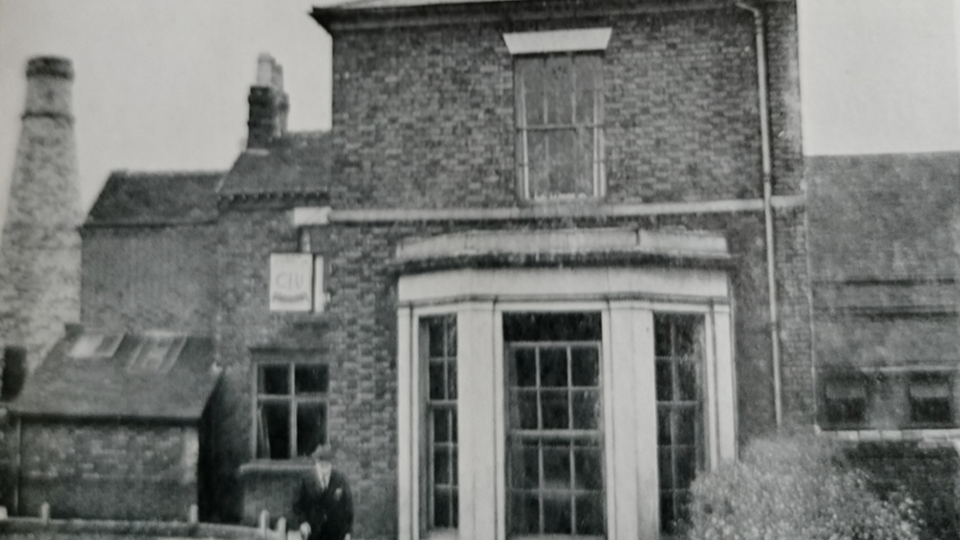
More importantly to us, Port Vale House was a huge place in Limekiln Lane, nowadays called Scott Lidgett Road. It occupied over an acre and a half, and contained an entrance hall, a drawing room, a library, several bedrooms, a toilet and offices, while outside had a coach house, three stables, a large garden and even a bar!
One hundred and fifty years ago this month, in January 1876, a meeting took place in Port Vale House with the idea of forming a football team as an offshoot of the Porthill Victoria cricket club.
Those at the meeting including Enoch Hood and his brother Jack, Billy Poulson, Sam Gater and William Powner, amongst others. A few days later, another meeting was held at Amen Corner nearby, and a name for the team was chosen. Whether it was named after Port Vale House is unclear, but there was plenty of Port Vale around, and it was the name of the area!
There was a field at the bottom of Limekiln Lane called The Meadows and that is where the first games - just friendlies - took place. Enoch Hood was the first captain and Jack Hood scored the first goal.
To raise funds, a hat was passed around, and it raised three shillings and four old pence, equivalent to 17p and worth around £25 in today’s money, ironically the price of an adult ticket nowadays in the Lorne Street Stand.
From small beginnings, Port Vale were up and running and on their way!